Notebook
Quarterly Letter: the Bubble and the Engine
A Socratic Dialogue on the AI Boom and what's ahead
By Cameron McLain



very cycle has its defining question. Today, it’s whether the AI boom is a bubble. This quarter’s letter takes the form of a Socratic dialogue, because this debate has many layers of truth that simple narratives obscure.
What began as a personal effort to interrogate my own assumptions challenged more of my priors than expected, so I’m sharing it knowing full well that predicting the future can be hubristic folly. My hope is that this dialogue illuminates the contours of the moment, as we all try to read the shifting winds of a new technological age.
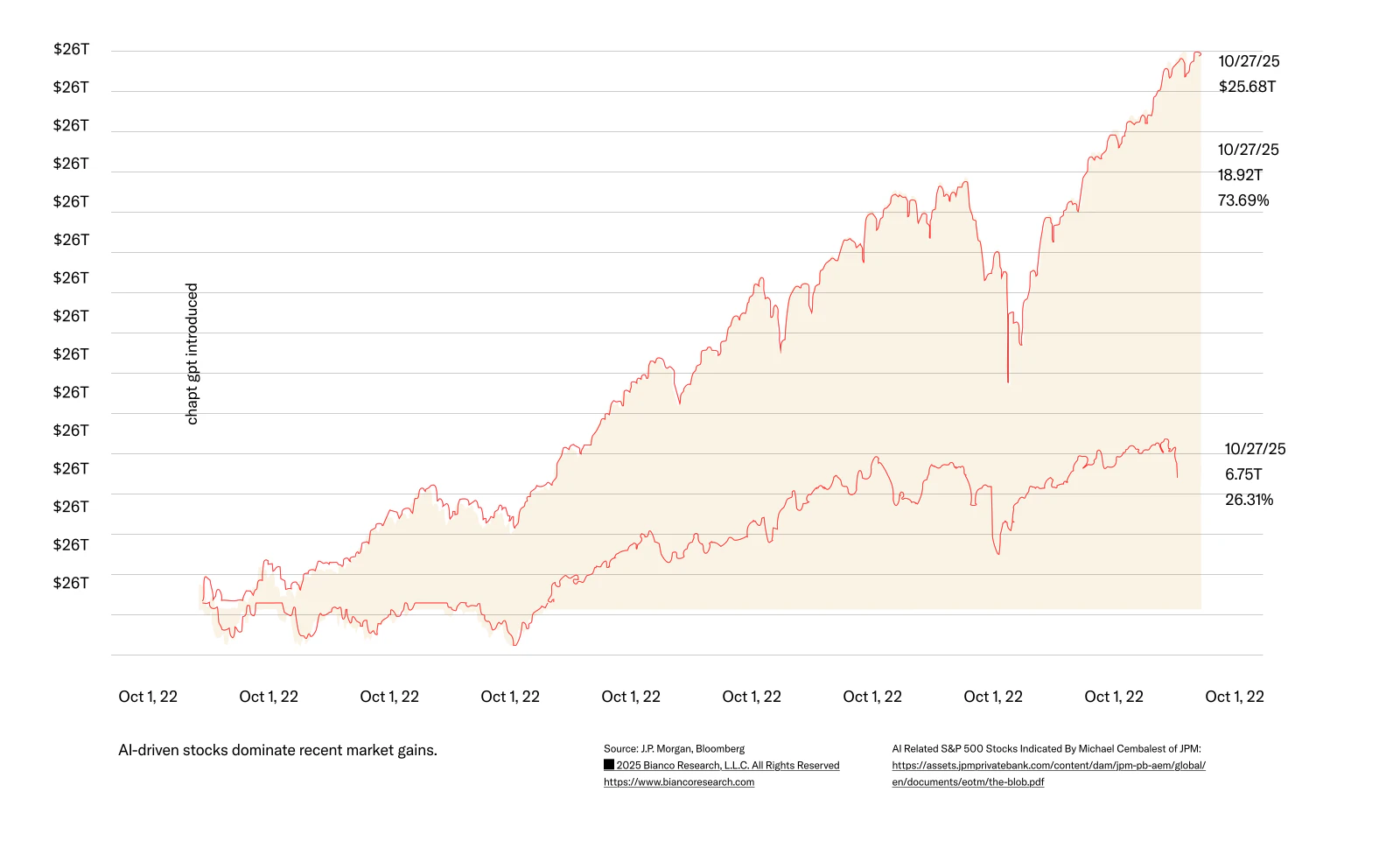
The Skeptic (S):
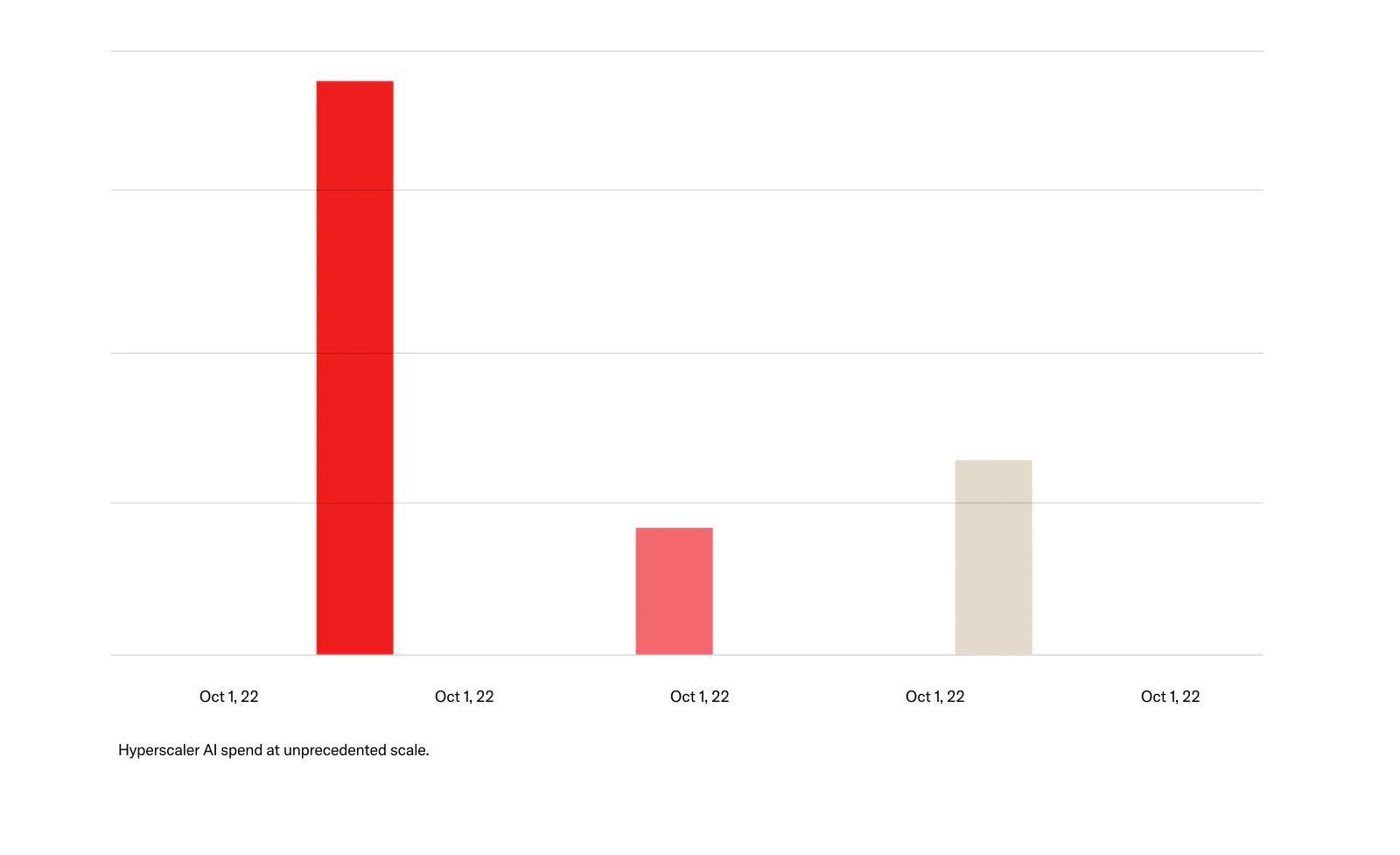
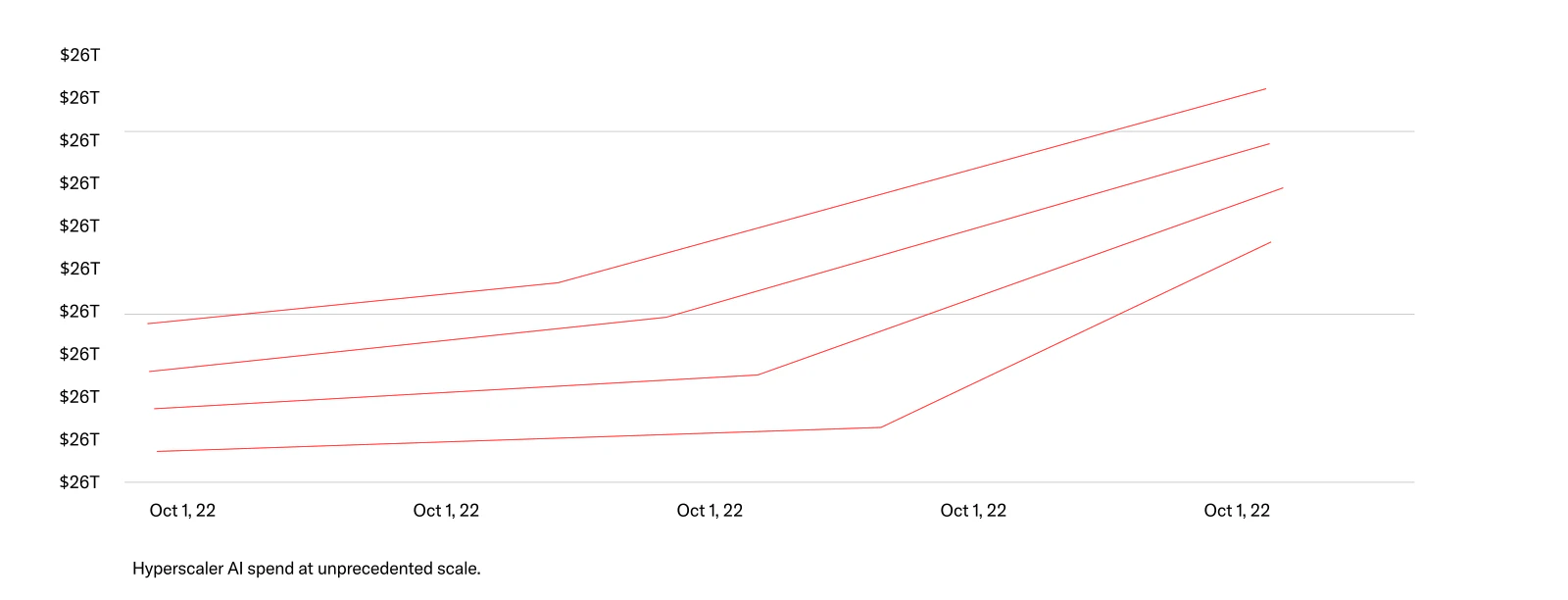
And don’t forget the CAPEX mania. The top four tech giants - Amazon, Meta, Microsoft, Alphabet - will invest nearly $1.5 trillion by 2028 in AI infrastructure. We’ve seen this movie before: overbuild, overspend, overhope.
The Optimist (O):
True. The signs rhyme with history. The dot-com parallels are glaring: valuations inflated, hype self-reinforcing, the same breathless rhetoric. Even Warren Buffett is hoarding $382 billion in cash, selling stocks for twelve consecutive quarters.
The Skeptic (S):
Yes, and like the railroads of the 19th Century, speculation fuels progress. Investors lost fortunes, but they left behind the backbone of the industrial economy.
The Optimist (O):
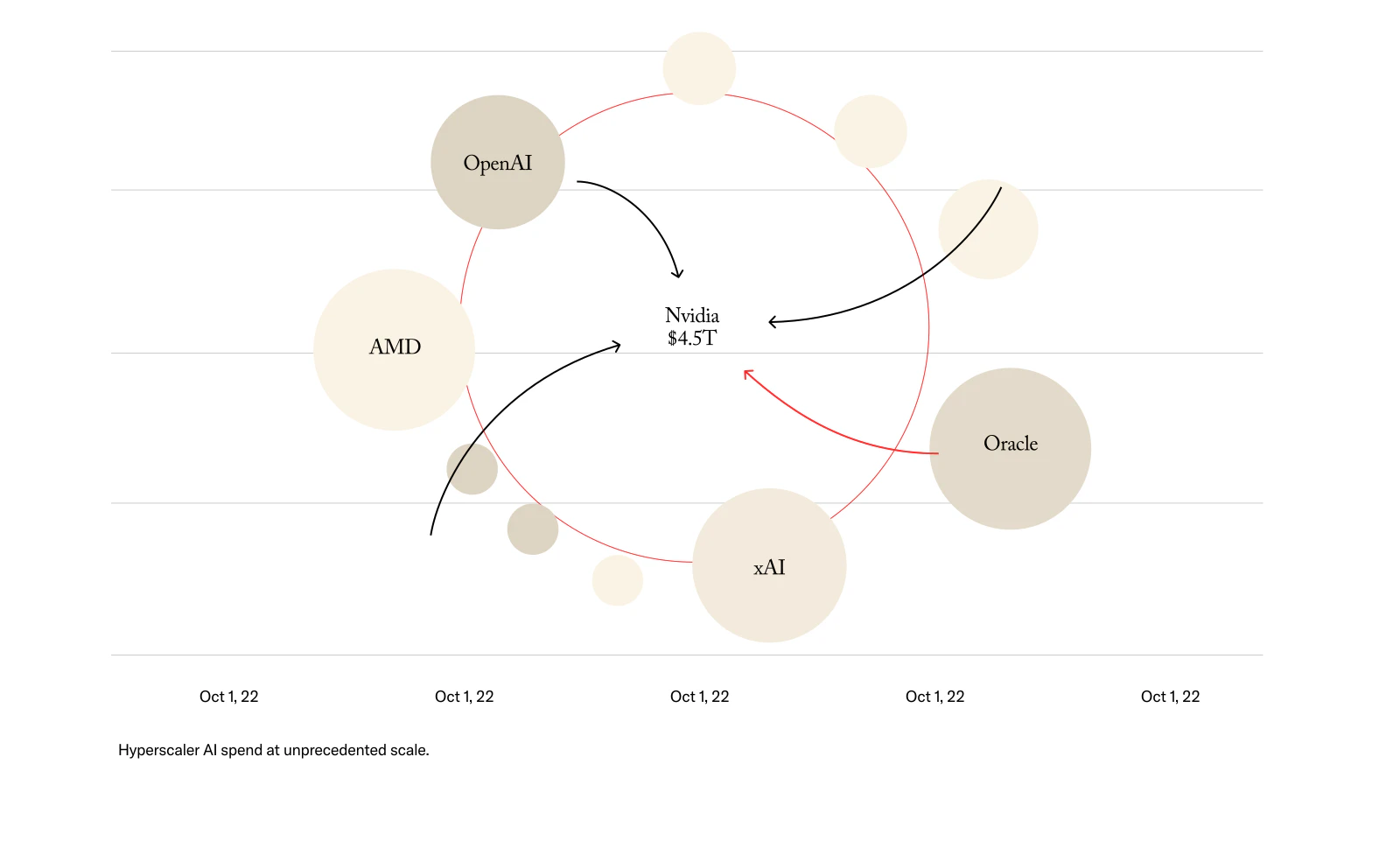
So let’s call it what it is. It’s a bubble. Valuations are stretched. The cyclically adjusted price-to-earnings (CAPE) is at 40x, the second-highest it has been in 150 years. Capital now moves in circles. A hall of mirrors where the same dollar is counted at every layer: chipmakers fund model labs, which pay cloud providers that lease capacity back to those same chipmakers.
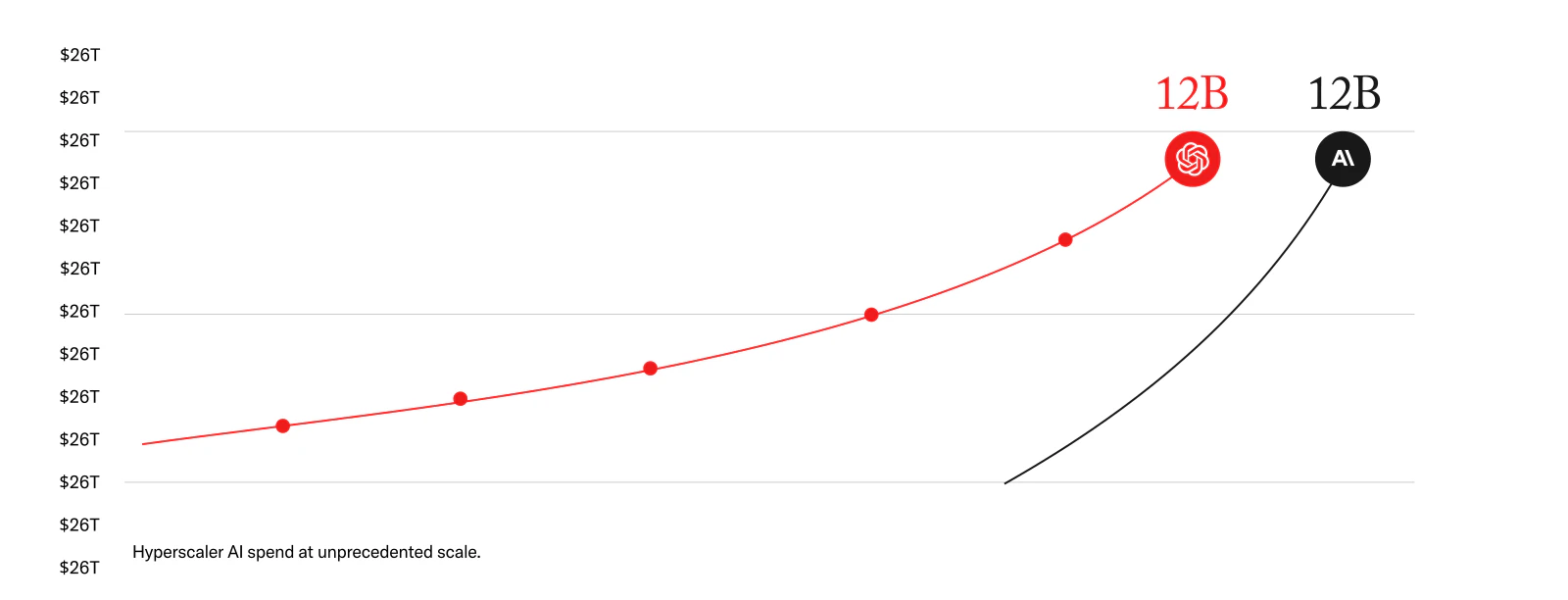
Reflexivity has never been so literal. Corporate AI adoption is actually falling, and OpenAI is reportedly burning $12 billion a year.
The Optimist (O):
Yes, and like the railroads of the 19th Century, speculation fuels progress. Investors lost fortunes, but they left behind the backbone of the industrial economy.
The Skeptic (S):
You sound like every optimist before the crash. What makes this time different?
The Optimist (O):
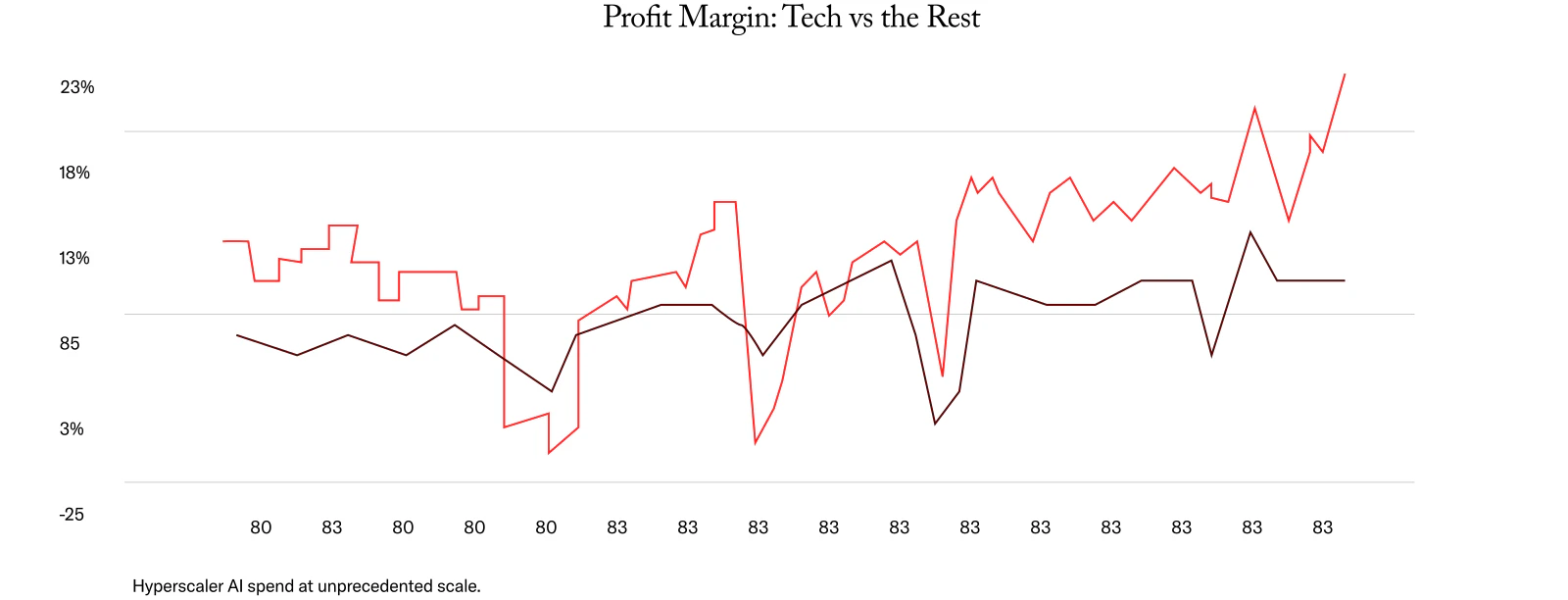
Several things: Capital Sources: This isn’t retail speculation or debt-fuelled exuberance, at least not yet. It’s trillion-dollar balance sheets reinvesting free cash flow. Yes, leverage is now entering the system via SPVs, but the AI infra boom has thus far been financed from profit, not borrowed hope.
- ◦
Universal Compute: AI will eventually enable every data process. Until we see idle data centres and returns below the risk-free rate, the build-out will continue. (Or, as Jensen Huang might say, “the more you buy, the more you save”). The technology is self-improving.
- ◦
Revenue Acceleration: Anthropic is expected to reach $9 billion in annualised revenue this year, having launched in 2023, and is projected to achieve profitability by 2027 and $70 billion in 2028. OpenAI is at a $13 billion run rate, with 90% user retention. Cursor is expected to generate $500 million in 2025, a fivefold increase from 2024. Synthesia has grown from $88 million to $146 million, and Surge AI is now profitable, having surpassed $1 billion in revenue by 2025. Yes, 2021 had hyper-growth too, but that cycle was behavioural, catalysed by a pandemic; AI is ontological. It changes what software is and how economic activity itself unfolds. And it saves money: IBM saved $3.5 billion, and JPMorgan 360,000 hours annually.
- ◦
Valuations: The Nasdaq’s forward P/E of 23× implies perhaps a 25% correction, not a 90% collapse.
The Skeptic (S):
I’m not convinced..
The Optimist (O):
AI’s productivity gains are still being learned. It took the car industry three decades to reorganise around electricity; AI may take ten. ChatGPT and Claude’s adoption curves already exceed those of the Internet in the 1990s. This is a deployment on a scale never seen before.
The Optimist (O):
I agree with you that it’s reflexive. Prices are inflated, yes, but they’re responding to genuine economic acceleration. History rhymes, but this rhyme has trillion-dollar balance sheets and exponential compute.
The Skeptic (S):
So we’re in a bubble.
The Optimist (O):
Undeniably.
The Skeptic (S):
And yet, you’re staying invested?
The Optimist (O):
Yes and no.
Cycles Rise and Fall
Ultimately, this Socratic exercise demonstrates that multiple truths must be held in parallel: we are in a bubble, and AI is genuinely transformative. Cycles rise and fall, narratives inflate and deflate, but the deeper forces shaping this moment are structural, not speculative. We’ve never seen a technology create and deliver so much value so quickly, or be self-learning in this manner.
AI is rewiring the economy’s foundations at a pace that renders familiar analogies obsolete. It will absorb a vast share of the GDP tied to manual labour and repetitive white-collar work, and in doing so, reshape the structure of the economy itself.
If pressed on timing, we believe we’re closer to a 1996 equivalent than 1999. When everyone calls a bubble, it rarely ends on cue. And while we expect a healthy correction, we do not anticipate the dramatic collapse that many predict, given the fundamental value being created by these companies and the underlying technology.
History shows that bubbles build the infrastructure of the future. Railroads, telegraphs, and the internet all emerged from periods of speculative heat. The same dynamic is unfolding again. The exuberance of today is constructing the foundations of the cognitive age.
The bubble and the engine are, in truth, the same machine.